


AGNES FRED After Death

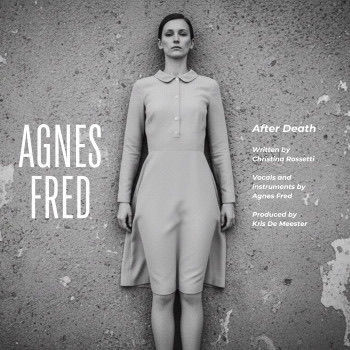
There is a hush at the heart of “After Death” that feels less like silence and more like a presence refusing to leave. The track unfolds as if it were built from memory residue those faint emotional imprints that linger long after the moment itself has dissolved. Drawing from Christina Rossetti’s delicate meditation on mortality, Agnes Fred does not simply reinterpret poetry but inhabits it, allowing its quiet devastation to seep into every corner of the composition. What emerges is not a retelling, but a re-experiencing grief refracted through atmosphere rather than narrative.
The sonic palette leans into dream pop’s weightless textures, yet there is nothing casual about its construction. The voice drifts like a distant signal, softened by layers of reverb that make it feel both intimate and unreachable. It doesn’t perform emotion so much as echo it, as though the feeling itself arrived first and the voice followed after. This restraint gives the track its emotional gravity; it never begs to be felt, yet it settles heavily in the listener’s chest. The effect is akin to remembering something important but never quite grasping it in full.
Kris De Meester approaches the piece with a cinematic sensibility, shaping sound the way a director frames a scene. Every element feels placed with intention, from the blurred edges of the instrumentation to the pacing that resists any obvious climax. The influence of visual storytelling is unmistakable this is music that seems aware of space, shadow, and absence. Rather than building toward release, it lingers in suspension, allowing tension to stretch thin without ever breaking.
What makes “After Death” particularly striking is its philosophical undercurrent. It quietly interrogates the nature of remembrance, suggesting that what survives someone may be less about truth and more about interpretation. The song becomes a mirror, reflecting not the lost figure but the one who continues to look back. In that sense, Agnes Fred’s debut is less about mourning and more about authorship who constructs the memory, and who lives within it. The answer remains unresolved, suspended like the final note, leaving behind a feeling that is as haunting as it is strangely beautiful.
Written by Patrick



Comments